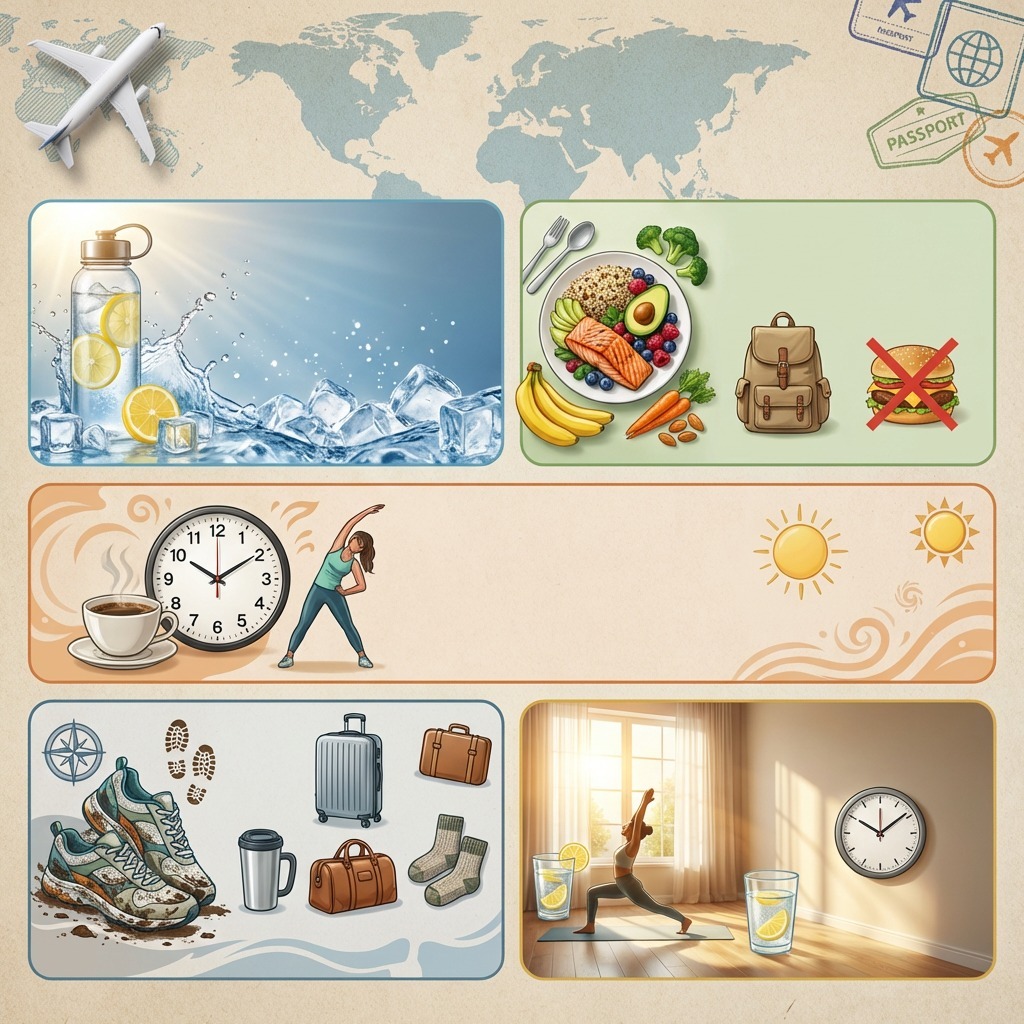
We’ve all been there: you’ve saved up for months, flown across the world, and landed in the city of your dreams. But by 2:00 PM on day two, your feet are throbbing, your head is pounding from dehydration, and you’re contemplating a nap in a cathedral pew rather than actually looking at the art.
Welcome to the Travel Burnout Zone.
Traveling is exhilarating, but it is also physically demanding. Between 20,000-step days, fluctuating climates, and the temptation of “vacation food,” your body can take a beating. If you want to actually remember your trip (and not just the inside of your hotel room), you need a strategy.
Here is your ultimate guide to staying energized, hydrated, and healthy while exploring the globe.
1. Master the Art of “Proactive Hydration”
When you’re distracted by the Colosseum or the neon lights of Tokyo, thirst cues often go unnoticed until you’re already dehydrated. Dehydration is the #1 cause of travel fatigue and “brain fog.”
- The Reusable Bottle Rule: Never leave your accommodation without a full bottle. In many European cities, look for public “nasoni” or drinking fountains to refill for free.
- The “First Liter” Strategy: Drink 500ml to 1 liter of water as soon as you wake up. This jumpstarts your metabolism and counters the dehydration caused by dry airplane air or hotel AC.
- Electrolytes are Your Best Friend: Plain water sometimes isn’t enough if you’re sweating in tropical humidity or hiking at high altitudes. Carry electrolyte powder packets to mix into your water once a day to maintain your salt and mineral balance.
2. Fuel Like an Athlete, Eat Like a Local
Food is a huge part of travel, and you should absolutely eat that croissant in Paris or that street taco in Mexico City. However, if every meal is a “heavy” meal, your energy will crater.
The “One for One” Rule
For every “indulgent” meal (think deep-dish pizza or heavy pasta), make your next meal a “performance” meal—something high in protein and fiber, like a large salad with grilled chicken or a Buddha bowl.
Smart Snacking
Avoid the “hangry” search for food, which usually leads to overpriced fast food. Keep these in your day pack:
- Raw Nuts & Seeds: High protein and healthy fats for sustained energy.
- Fresh Fruit: High water content and natural sugars for a quick lift.
- Dark Chocolate: A small square provides a magnesium boost and a bit of caffeine without the crash.
3. Beating the Afternoon Slump
The “3:00 PM Crash” is real, especially when jet lag is involved. Instead of reaching for a third espresso—which might ruin your sleep later—try these biological hacks:
- The 10-Minute Movement Break: If you’ve been sitting on a tour bus or in a museum, do some light stretching or find a park to walk briskly for 10 minutes. It increases blood flow to the brain better than caffeine.
- Splash Cold Water: It sounds old-school, but splashing cold water on your face or running cold water over your wrists stimulates the vagus nerve, which can “reset” your nervous system and make you feel more alert.
- The Power Nap (Done Right): If you must nap, keep it to 20 minutes. Anything longer puts you into deep sleep, leaving you feeling “sleep-drunk” (sleep inertia) for the rest of the evening.
4. Footwear: The Foundation of Energy
You can have the best diet in the world, but if your feet are in pain, your energy will drain instantly.
- Never Wear New Shoes: The “virgin voyage” of a pair of shoes should never be a sightseeing trip. Break them in for at least two weeks before you fly.
- Rotate Your Shoes: If possible, bring two pairs of walking shoes and alternate them. This changes the pressure points on your feet and allows each pair of shoes to “decompress” and dry out completely.
- Compression Socks: Not just for the plane! If you know you’ll be standing in lines all day, light compression socks can help prevent leg swelling and fatigue.
5. The “Traveler’s Morning Ritual”
How you start your day determines how much you’ll see. Instead of rushing out the door, take 15 minutes for a “Body Scan.”
- Stretch: Focus on your hip flexors, calves, and lower back—the areas most taxed by walking.
- Sunlight Exposure: Get 10 minutes of natural sunlight as early as possible. This regulates your circadian rhythm and helps your body understand it’s time to be awake, effectively fighting jet lag.
- Review the Map: Minimize “decision fatigue” by having a general plan. Wandering aimlessly is fun, but doing it while tired and hungry is a recipe for a meltdown.
Summary: Your Wellbeing Checklist
| Category | Action Item |
| Hydration | Drink 1L of water before leaving the hotel. |
| Nutrition | Pack high-protein snacks; avoid “sugar-only” breakfasts. |
| Recovery | Use a tennis ball to roll out your feet at night. |
| Sleep | Use an eye mask and earplugs to ensure quality rest. |
Pro Tip: Don’t feel guilty about taking a “down day.” If you’re on a two-week trip, schedule one afternoon every four days to do absolutely nothing but sit in a cafe or by a pool. It’s not “wasting time”—it’s recharging your battery so the rest of the trip is actually enjoyable.
Traveling fast doesn’t have to mean burning out. By treating your body like the incredible vehicle it is, you’ll see more, do more, and actually feel good enough to enjoy it.